JazzUSA.COM - Short Takes - October 2001  
October 2001
The 'Short Takes' section is intended to give recognition to some of the releases we do not have time to give a 'full' review, but felt you should know about. Reader response to this new 'condensed' format has been overwhelmingly favorable, so Enjoy! - ed
This month get the 'short takes' on
Ferdinando Argenti, Joe Pass, Peter Martin, Hugh Ragin Trumpet Ensemble, Lee Ann Ledgerwood, Joel Brandon, Philip Catherine, Bill Evans and Don Elliot, Don Byron, Tierney Sutton, The Essential Mingus Big Band, Paolo Di Sabatino, Crosscurrent

Ferdinando Argenti Ferdinando Argenti
Argenti
(Ferdi's Music - 2000)
by John Barrett


Ferdinando Argenti is elegant. His tunes are textured, with colors changing often - sometimes it sounds like film music. After his languid piano, "Space in Time" yields to a somber accordion, pounding left-hand chords, a muted horn section - and a blues-tinged solo from Ferdi. Phil Person shouts a good trumpet, with short, potent bursts; this waltz is tough, and beautiful as well. "Pisa Nova" (named for Ferdi's hometown) mixes delicate echoes and breezy cymbals - it's a fast trip down an exciting street. Listen to Bob Savine, the drummer: when Arngenti slows down, he goes stronger. Flute and horns unite for "Suzanne", slowing sweet over a tropical beat. The piano trickles, bubbling down happy streams. A quiet, fireside feel on "Ferdi's Mood" is blunted by synthetic strings; a moment like this should be left to itself. Tim McCall is a foghorn on "Sea Sadness": his tenor calls from the dock, awash in Argenti's chords. (Again, the synths seem intrusive, but they're gone in a moment.) And on "Love Is Here to Stay" we get a trio, flashing chords and kicking cymbals. This is real strength, and it's real good.

While Ferdi's playing voice is aggressive, his singing voice is subdued, sensitive - and something like Ivan Lins. He murmurs the lyric on "You Don't Know What Love Is", achieving effortless cool. It's followed by his strongest piano, and a great bass solo by Raetus Flisch. "In Cerca di Te" was an Italian hit in the Swing Era; Ferdi does it with wailing horns and "Sing Sing Sing" drums, packing a mighty punch. "La Pin' Bella del Mondo" blares forth: the voice comes at you, as confident as the horns around it. Person's trumpet is good, as is Al Cron, whose trombone reminds me of Rosolino. And "Bambino Inamorata" is a final breath of quiet: tender sayings, made warmer by bells and Person's horn. This album doesn't grab you by force; it leans in your ear, whispers - and sometimes that's all you need.

Click to return to the top of the short takes page

Joe Pass Joe Pass
What Is There To Say
(Pablo - 2001)
by Dick Bogle


Joe Pass was one of the all-time greatest guitarists and this 11-track CD has five previously unreleased works included. It’s all Pass. Recorded live at Hollywood’s Vine Street Bar and Grill in 1990, Pass is lighthearted on “Django,” pensive on “Old Folks” and swinging on “On Green Dolphin Street.”

He calls upon noted composers Alec Wilde for “I’ll Be Around,” George Gershwin for “They Can’t Take That Away From Me” and Cole Porter for “I Concentrate On You.” This is one of the best at his best!

Click to return to the top of the short takes page

Peter Martin Peter Martin
Something Unexpected
(Maxjazz - 2001)
by Sidney Bechet-Mandela


It looks like the Maxjazz piano series will be as successful as their wildly popular vocal series. Unlike the first album with Bruce Barth, and the upcoming one with Jessica Willaims, the Peter Martin release doesn't just feature the lead keyboard player. Recorded live in St. Louis, the home of MaxJazz, this ten-song set features a quintet from New Orleans, with three members of the great Nicholas Payton Quintet, including the revered leader on trumpet. Martin uses the group to recreate his exquisite compositions and as a springboard to his riveting solos. The group sounds as cohesive as Payton's notoriously sharp band. The cover tunes include compositions by Jobim, Jackie McLean, Kenny Dorham and a very hip version of Stevie Wonder's "I Wish."

Click to return to the top of the short takes page


Hugh Ragin Trumpet Ensemble Hugh Ragin Trumpet Ensemble
Fanfare and Fiesta
(Justin Time - 2000)
by John Barrett


In a way, they're like drummers - if you put trumpeters in the same room, they'll start competing. This septet has four horns, plus a visit from Clark Terry, king of the jam session. For starters, they burst into "Finger Filibuster", a jam blues written by Terry. Clark begins, on flugelhorn; he's initially calm, but the aggression grows from there. Ragin is fast and he is furious: sharp four-note phrases, built with angular progression. Faster he goes, with French horn whooping noises; the exchanges are hot, with all the horns chiming in. After an impressionist opening (Craig Taborn, on dreamy piano), "Fanfare & Fiesta" marches into the bullring, trills screaming from speaker to speaker. Omar Kabir rises like a proud sunrise: slow, yawning, and grand. His fancy filigrees are met by a wave of warm brass; Dontae Winslow blares strongly, in sheets of sound. Ragin then shouts, high and pure (we're talking Ferguson country) - it'll surprise those who heard his first solo. "Spacemen", based on "The Theme", takes off with a scat from Terry, wonderful mutework from Kabir (he sounds like Charlie Brown's teacher!), a great flugeling bit by Clark, and a burst of exciting piano. No doubt - this is a blast.

The disc's second half is sort of a tribute to Lester Bowie: raucous howls on "Barnyard Scuffel Shuffel", a chorus of mutes on "How Strange". James Zollar is wonderful: from the gravelly haze he emerges, plunging in the grand old style. Ragin and Winslow then duet, both open and both sad; Zollar returns, and the growling resumes. The mutes show up well on "Harmonic Architecture", and "A Prayer for Lester Bowie" is a defiant chord, building like the intro to "Ascension". Each man pays his respect in turn, with rage or with despair, but always with passion. And "Emergency Exit" features Ragin's bold, Hubbard-like exclamations amid Taborn's Cecil Taylor-like turmoil. By turns ambitious and traditional, this group is a brass version of the World Saxophone Quartet - offering experiments in an accessible context. While inconsistent, the sound is compelling, and worth hearing.

Click to return to the top of the short takes page

Lee Ann Ledgerwood Lee Ann Ledgerwood
Paradox
(Steeplechase - 2001)
by Dick Bogle

It is a stone pity that we here in the Northwest haven’t had the opportunity to hear this fabulous pianist. Lee Ann Ledgerwood astounds with her virtuosity on track after track, working with bassist Ron McClure and drummer Billy Hart. Her performance of John Coltrane’s “Wise One” convinces there is some sort of spiritual bond between the two which crosses time, space and eternity.

She generates the same sort of emotional response to his music as does he. Don’t take that to indicate she limits herself to only deep, heavy intellectual exercises. She tackles McCoy Tyner’s “ Blues On The Corner” with a greasy authenticity. Other tunes include “The Night Has A Thousand Eyes,” “My Funny Valentine,” “India,” “Spring Is Here,” “Paradox,” and “Some Other Time".

Click to return to the top of the short takes page

Joel Brandon Joel Brandon
Haven't We All
(Southport Records - 2001)
by Mark Ruffin


Brandon is not only a former international whistling champion, but a member of the Whistling Hall of Fame. "Haven't We All," is his debut album, and for many, his introduction to the jazz world. As the album cover clearly states, he not only whistles, but sings and plays flute. But it is his very unique style of whistling while inhaling that should get this disc some attention. The sterling personnel is mostly made up of members of the historic Association for the Advancement of Creative Musicians, (AACM) of which Brandon is a member.

Legendary drummer Billy Higgins, in one of his last recordings before his death, appears on three of the disc's eight tracks. The music and the musicians were much more ambitious than the recording engineer here, who sounds as if he's nodding at the switches. The songs are all originals, except for Coltrane's "Countdown," and Ellington's "In A Sentimental Mood," both of which are performed as duets with pianist Kirk Brown. The best of the originals is an autobiographical ditty called "The Whistler's Rhyme."

Click to return to the top of the short takes page


Philip Catherine Philip Catherine
Blue Prince
(Dreyfus Jazz - 2000)
by John Barrett


Philip Catherine has many tones - some all at once, thanks to overdubbing. He can play tribute: a Joe Pass lyricism on "With a Song in My Heart" gives way to Montgomery octaves. He can run wild: snaky notes creep through "Coffee Groove", helped by a busy bass. He starts twanging one string, taking it harder each line - and then the distortion kicks in. Bert Joris' trumpet, inspired by Freddie Hubbard, finds a high perch and yelps softly. The blues are solid on "The Creeper": Philip starts with dirty chords, moves to cloudlike fuzz, and wiggles with speed. Joris is flutelike on the theme; his solo is a weeper, with an elegant drawl. "The Postman" delivers sunshine: after Bert's lovely theme, Catherine trips lightly, in sweet chords. Juris flutters to the top, the brushes get stronger, and everyone has a good time. Likewise, "Memories of You": notes in descending spiral, a good bass-walk, and the sound of an endless lazy day. When the groove is right, it's all you need.

The group intersects well together, and is very conisistent, perhaps too much so. (Some of the tunes sound alike, good though they are.) "Kwa Heri" starts plainly, then Catherine hits a harpsichord-like riff as Juris brings his mute. Phil's own solo has bluesy moments, and then struts like a rock star. "Arthur Rainbow" starts with the bassist's drone; Philip bats a quick rhythm and Bert plays a sort of lament. I love this guitar solo: varied, slowly developing, and tender. Juris' "Magic Box" gives Bert a chance to run - it isn't a bop tune, but has some of that feeling. The trumpet is its most assured, with Philip way in the background' Hein van de Geyn gets his chance on "Sweet Lorraine", a poetic bass surrounded by strums. While I would have liked more variety, this album has a lot of charm, and will relax if you've a taste for guitar.

Click to return to the top of the short takes page

Bill Evans and Don Elliot Bill Evans and Don Elliot
Tenderly
(Pablo - 2001)
by Dick Bogle


This session took place sometime in either 1956 or ’57 at the home studio of multi-instrumentalist Don Elliot. It began informally, with the soon-to-be-recognized Evans asking Elliot if the recording process had begun. That’s the opening to “Tenderly.” After a false start, Evans — with Elliot on vibes — gets into an exuberant “I’ll Take Romance.”

All kinds of great tunes follow, including “Laura,” “Thou Swell,” “ I’ll Know,” “Like Someone In Love,” “Stella By Starlight” and more. If you want the sense of being there like a fly on the wall and would dig the informality of it all, this is for you.

Click to return to the top of the short takes page

Don Byron Don Byron
You Are #6 - More Music For Six Musicians
(Blue Note - 2001)
by Mark Ruffin


To say that clarinet player, Don Byron, is an eclectic avant-garde musician, would be an understatement. That being stated, along with the notion that his music is an acquired taste, know that this is by far his most accessible album to date. A sequel to his early 90's disc "Music For Six Musicians," "You Are #6," is much less political that its predecessor. The silly one minute ode to George Bush, titled "Dub-Ya," is the only evidence that Byron even cares about politics. What is obvious in the development of Byron as an artist and composer, is that he has grown a hard fascination with Latin and Brazilian rhythms, as well over two thirds of this record is dedicated to those genres.

But just as was the case with his brilliant 1998 album, "Nu Blaxplotation," there is some interesting spoken word on the disc, and one tune with undeniable commercial appeal. On the earlier disc, it was the unbelievable funky version of the already funky 70's classic by Mandrill, "Fencewalk." Here it is the calypso number, Shake It Up," which provided exposure, could be a huge Caribbean hit for the dreadlocked reed man.

Click to return to the top of the short takes page


Tierney Sutton Tierney Sutton
Blue In Green
(Telarc - 2001)
by John Barrett


After her album Unsung Heroes (singing tunes with rarely-heard lyrics) Tierney Sutton chose a slightly different project: a vocal tribute to an instrumental artist. Taking it further, this look at Bill Evans has only five of his songs; the rest are standards, played by Bill on his various albums. She speaks softly on "Just Squeeze Me", sounding a bit like an alto sax. Christian Jacob adds a few chords, sparse and warm - he doesn't copy Evans, for which I am glad. Ray Brinker's brushes are the power behind "Autumn Leaves": taken at double-time, Tierney skips along as the background turns sour. Jacob's solo is breathless and brash, followed by a muscular scat session. "Never Let Me Go" is more earthy, and more innocent: Sutton starts with a moan, and the words arrive with a broad, woody tone. The focus is on Trey Henry's bass, swaying like an ancient tree. A second bass joins him on "Sometime Ago": Ken Wild forms chords from Henry's notes, while Tierney sings joy from a girlish heart. She's resigned on "Detour Ahead", a sound weary as Evans' on the Village Vanguard date. (Christian shows the same mood, with his slow contemplation.) "Just You, Just Me" is a duet with brushes, as intimate as you'd want it. The verse is quickly said, then an alto-like scat, then the verse, and then the ending - all in two minutes. Love can be like that.

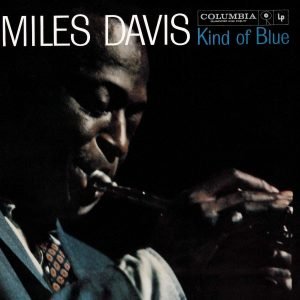
On Evans' own tunes, Tierney is softer, and a tad more emotional. "Blue in Green" (credited to Miles Davis, but probably by Bill) gets a wordless wail, and then a quiet lyric by Meredith d'Ambrosio. Jacob has a rainy solo; better is Henry, whose two-note drone is right for the piece. There is real loneliness in "Turn Out the Stars"; calm at first, Tierney shouts her despair as Christian plays pretty. (The same mood prevails on "We Will Meet Again", told with classical formality.) After a happy "Waltz for Debby", the tune becomes Evans' "Tiffany", with a new lyric by the song's subject. (Tiffany's father, Joe LaBarbera, plays on this one.) The words are absolutely priceless: "Smiling lips that whisper girlish swears to give your heart to me." It's so lovely that when "Debby" returns, the line "they will miss her" is even sadder than usual. This bittersweet joy is all through the work of Bill Evans - Tierney Sutton understands this, and conveys it well.

Click to return to the top of the short takes page

The Essential Mingus Big Band The Essential Mingus Big Band

(Dreyfus - 2001)
by Dick Bogle


Close to 150 New York area musicians are on the list of players Sue Mingus can call for either a tour or the regular Thursday night gig at New York’s Time Café. The nine tunes on this Dreyfus release are branded “essential” because they constitute the essence of the Mingus Big Band’s recorded output. Five previously released CDs are represented with selected cuts and slightly differing personnel.

“Gunslinging Birds,” the title tune of the band’s 1995 release, features a sax section of Craig Handy, John Stubblefield, David Lee, Steve Slagle, Chris Potter and Gary Smulyan. “Boogie Stop Shuffle,” another band staple, has many of the same reed players and on trumpets has Randy Brecker, Ryan Kisor and Alex Sipiagin. Some of the trombonists heard on any number of cuts include Conrad Herwig, Jamal Haynes, Ku- umba Frank Lacy, Dave Taylor and Clark Gayton.

Two pianists — Kenny Drew Jr. and David Kikoski — are heard in a rhythm section with bassists Michael Formanek, Andy McKee and John Benitez and drummers Marvin Smith, Gene Jackson, Adam Cruz, Jonathan Blake and Victor Jones. These are some of the best efforts by the best big band in the business.

Click to return to the top of the short takes page

Paolo Di Sabatino Paolo Di Sabatino
Threeo
(Hallway - 2001)
by Sidney Bechet-Mandela


Some weird Dr. Stangejazz has gone to the Dominican Republic and lifted the musical DNA of pianist Michel Camilo, flew it to Italy and put it into the fingers of Paolo Di Sabatino. Even the rhythm section of drummer Horacio Hernandez and bassist John Patitucci, are former employees of the fiery Dominican, and they accompany and shadow the Italian just as tight as they do Camilo. Also like Camilo, Di Sabatino is a worthy enough composer to have his tunes stand up next to standards by Jules Styne, Bud Powell, Victor Young and others.

Click to return to the top of the short takes page


Crosscurrent Crosscurrent
Rituals
(Laugh & Jangle - 2001)
by John Barrett


You hear many emotions: thoughtfulness, adventure, strength … and innocence, so rare in music. I hear echoes of Oregon, the earliest Coryell, Zappa instrumentals, half-forgotten groups like Entourage - the first days of fusion, at its most open-minded. The moods begin with rhythm - either calm cymbals or a cluster of hand-drums - and the guitar of Eric T. Johnson, adding a number of flavors. His tone is dirty for "Intersections": round rambling notes, with a tiny hint of fuzz. The other instruments circle around him, especially Carl Clements; his sax is crying, with a wispy sort of voice. Ben Cook provides a pensive piano, and the soprano keeps climbing higher. On "North March", Clements sounds like an oboe, and he twirls beside Johnson's acoustic guitar - the sound is exactly like Oregon's. Played in a vigorous 5/4, the tune skips like a child; part of the joy is not knowing what comes next. David Crosby's "Guinnivere" reveals herself slowly: Josh Davis groans a note on bowed bass, and Clements picks it up on tenor. Cook plays a drawing-room theme; Johnson sprinkles a few notes on top. Eric and Carl then play in unison, followed by the others: it sounds to busy, but the harmonies are striking. "Stop and Go" travels a fast road (Cook calls in short bursts, like a car horn) and "Crosscurrent" pairs Davis' bow and Johnson's undulating strings - an endless stream, but many rivulets. Sit back, and hear the music flow by.

Clements' flute whistles through the waltz of "Mirrormere", a happy thought vigorously exercised. While the piano and brushes treat it as a salon piece, Carl does not; he chirps with power, letting all share in his joy. "Seven of Mine" takes one of the rarest time signatures, 7/4, and works it into a natural-sounding near-rondo. Cook's fluttering theme is varied by the others, a caucus race without an end. Honors go to the ever-changing percussion; Davis' string-snapping solo is his best. The twelve-minute "Ritual" starts with more of that good bass, and becomes an Eastern meditation with wooden flute and ethereal keys. Drums slowly intrude, and the flute toughens its sound - still the peace remains. And the disc closes with formality: "Now the Day Is Gone", played by Carl with sweetness, joined by the band on the second chorus. Josh's bow is welcome, and Eric adds some beautiful twinkles - so perfect in its conception, so sad that it has to end. While it is their third album, this is my first encounter with Crosscurrent. I hope it is not my last.

Click to return to the top of the short takes page


Dick Bogle's contributions are Reprinted with kind permission of The Skanner.

 BACK